



mid96

How to Decorate with a Beach House Aesthetic

Written by Julian Heisler

There’s something about a beach house that feels instantly calming. The light seems softer, the air feels looser, and everything moves at a gentler pace. It is not about perfection or polish. It is about ease. And while living by the ocean certainly helps, that feeling is not exclusive to coastal addresses. A modern beach house aesthetic can exist anywhere, as long as the space feels open, natural, and unforced. It has very little to do with literal references and everything to do with atmosphere.

Today’s beach house style has quietly evolved. It has moved away from obvious motifs and leaned into something more refined and lived-in. Instead of shells, ropes, and anchors, it draws inspiration from light, texture, and the way materials age over time. The goal is not to decorate around the idea of the sea, but to capture the feeling of being near it. That sense of openness, of breathing room, of nothing trying too hard.

Color plays a big role, but it is handled with restraint. Think of tones that look as though they have been softened by sun and salt. Warm whites rather than stark ones. Sandy beiges, pale taupes, and soft stone. Muted blues and greys that feel closer to the horizon than to navy. These colors create a backdrop that feels calm and expansive, allowing the eye to move easily through a space. Layered together, they bring depth without visual noise, which is essential to keeping the atmosphere relaxed.

Light is central to this aesthetic. In coastal-inspired homes, light is treated almost like a material. Natural light is ideal, and if you have it, let it lead. Sheer curtains in linen or cotton allow sunlight to filter in gently, softening shadows rather than blocking them. Heavy drapery tends to work against the mood. If privacy is a concern, light-toned blinds or woven shades keep things airy while still feeling grounded.

In spaces where natural light is limited, the effect can still be achieved. Soft, warm lighting creates the same sense of ease when layered thoughtfully. Instead of relying on a single overhead light, use table lamps, wall sconces, and floor lamps to create pockets of glow. Light-reflective surfaces like matte white walls, pale timber, or subtle metallic accents help bounce that light around, giving the room a quiet brightness rather than a sharp one.

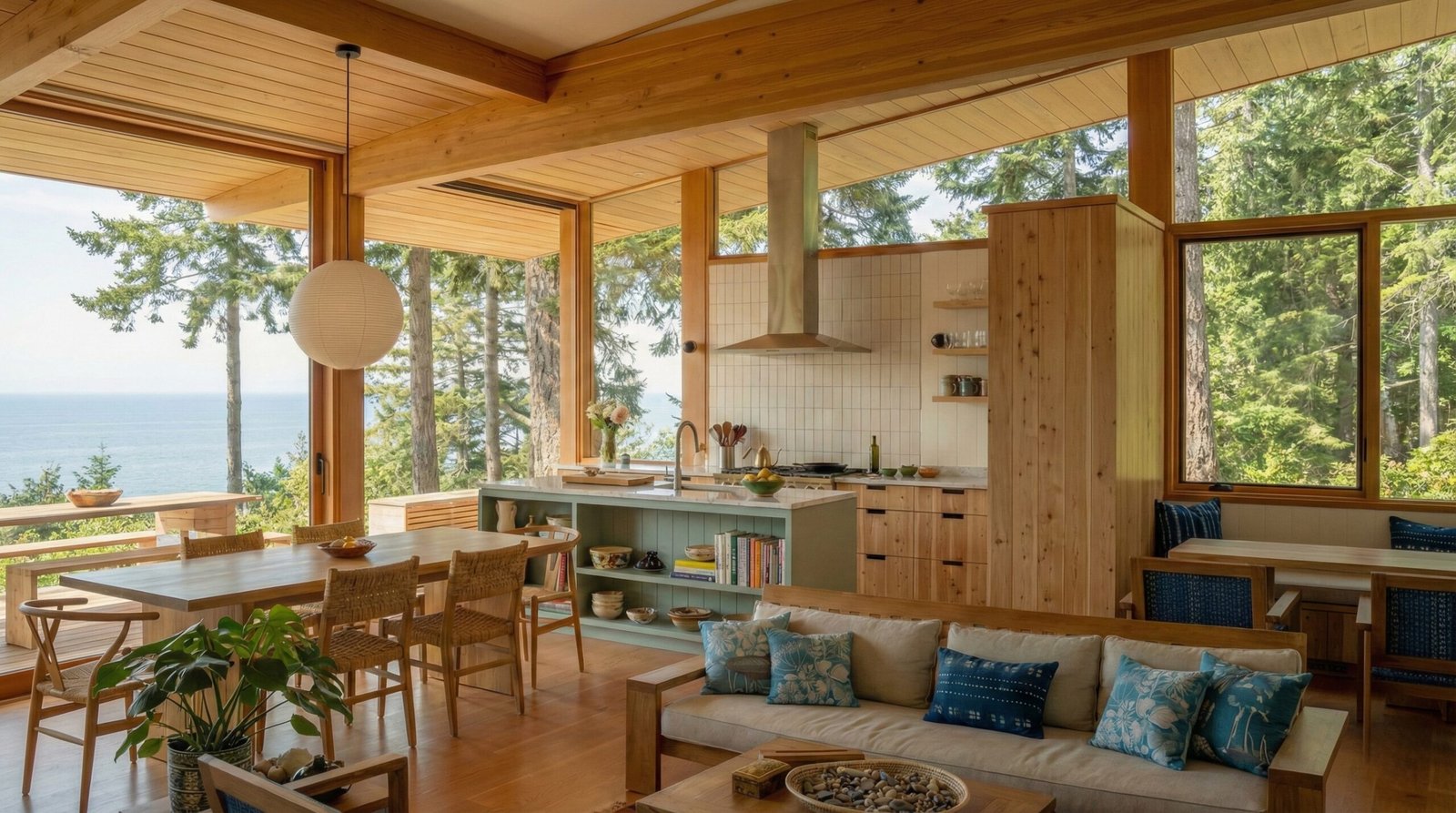
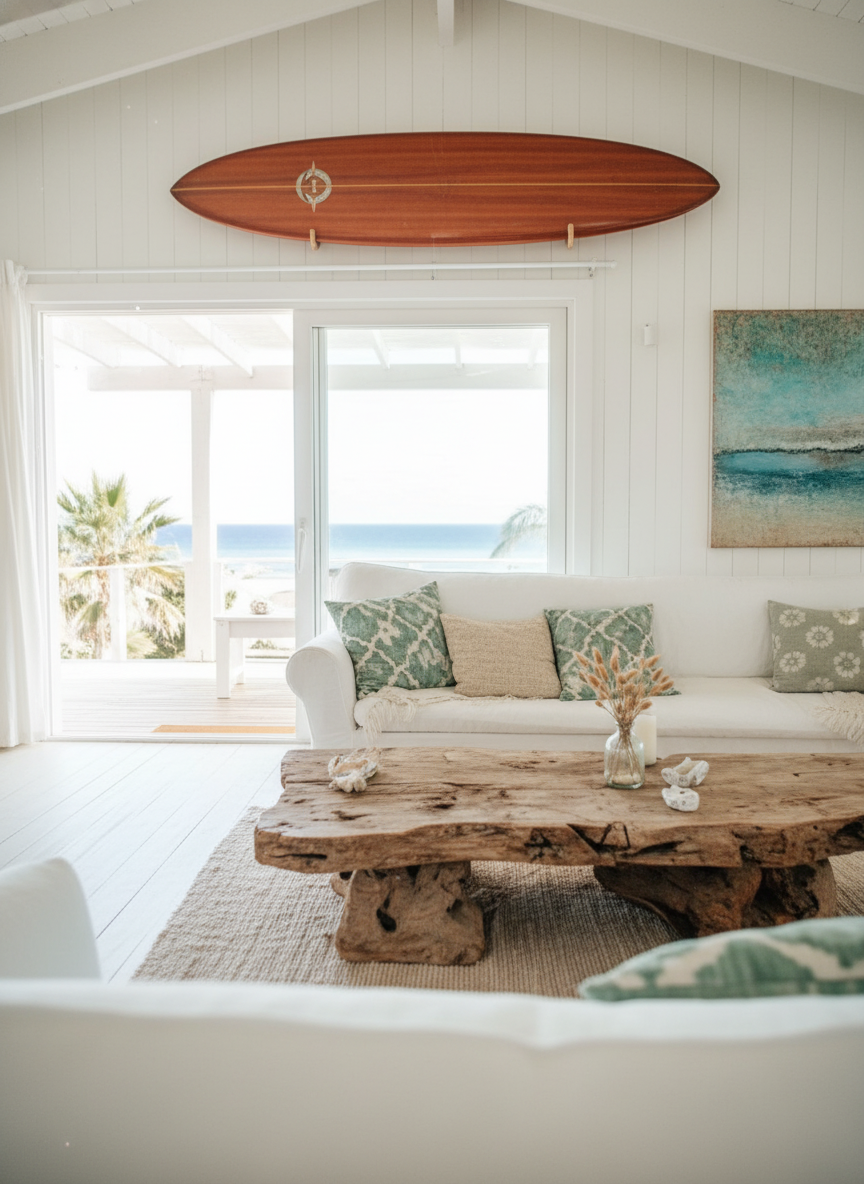
Furniture in a beach house-inspired home should feel relaxed, not precious. Comfort matters, but so does character. Natural materials are key. Timber with visible grain, woven rattan, jute, and linen all bring texture and warmth. Pieces should look like they belong, not like they were placed for effect. Slip-covered sofas in neutral fabrics feel casual and inviting, while low-profile seating keeps the space feeling grounded and open.

generated image 32
generated image 33

Rather than filling a room with statement furniture, the focus is on fewer, better pieces. A solid timber coffee table with an imperfect edge. A cane chair that has softened with age. A bench that looks like it has been pulled in from a veranda. These items carry a sense of history, even if they are new, and that sense of longevity is part of what makes a space feel calm.

Decor is where restraint really matters. Coastal interiors breathe best when they are uncluttered. This does not mean empty or sparse, but intentional. Every object should feel considered. A ceramic vase in a sandy glaze. A shallow bowl for collected stones or shells found on a walk, not arranged as decor but simply kept because they matter. A single framed photograph of the coastline, chosen for mood rather than detail.

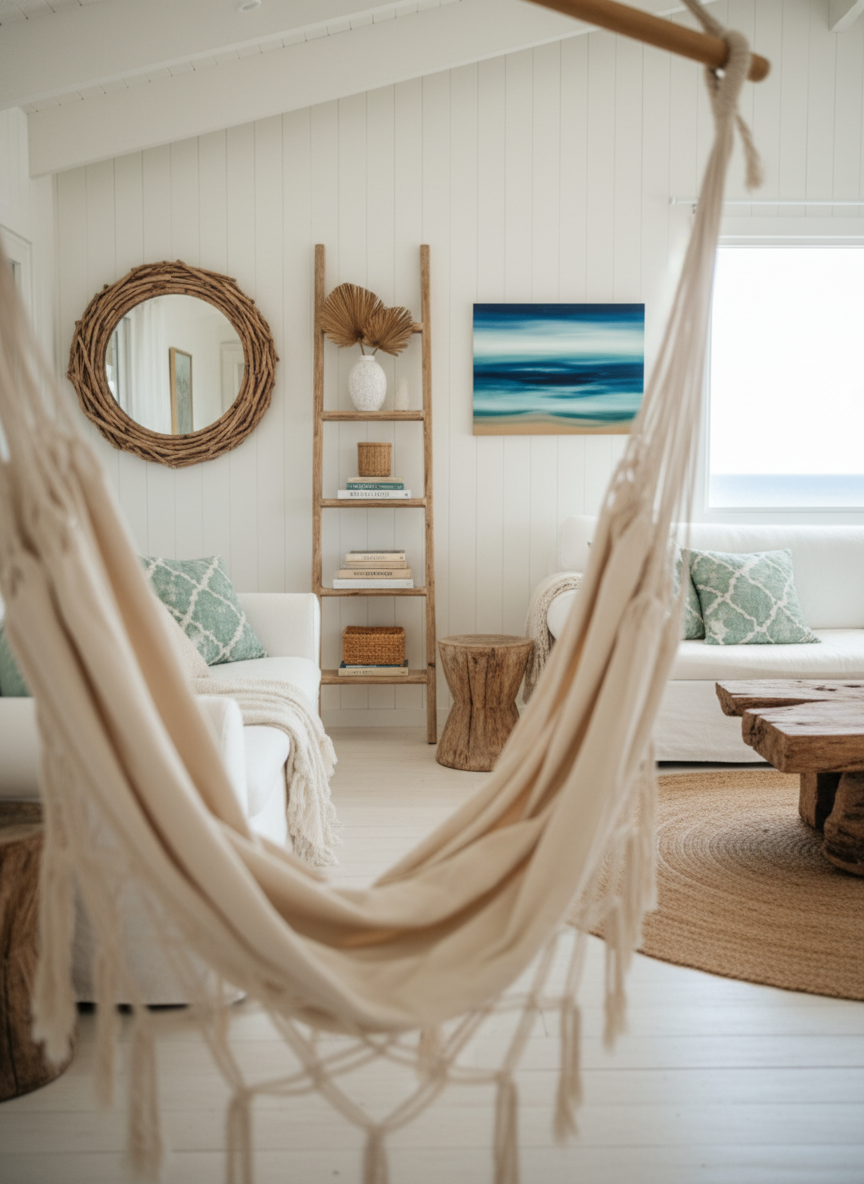
Textiles do much of the quiet work in these spaces. Woven rugs, lightweight throws, and cushions in soft, neutral tones add comfort without heaviness. Subtle stripes, gentle texture, or faint blue-grey undertones can nod to the coast without being obvious. Layering textiles helps a room feel finished while still relaxed, like a bed made with care but not precision.

If you are building the look from the ground up, start with texture rather than color. Texture adds depth without demanding attention. Seagrass baskets, raw ceramics, linen upholstery, and pale timber floors all contribute to the feeling before any accent color is introduced. Even one strong textural element can shift the mood of a room, making it feel more natural and at ease.

Art is another area where modern beach house design has become more nuanced. Instead of literal coastal imagery, look for pieces that evoke nature in a quieter way. Abstract forms that suggest movement, minimalist line drawings, or black-and-white photography of landscapes all work beautifully. These pieces leave space for interpretation, which mirrors the openness of the aesthetic itself.

Scent, though often overlooked, plays a subtle but powerful role. A light, clean fragrance can reinforce the atmosphere in an almost invisible way. Notes like salt, citrus, fig, or soft woods feel fresh without being overpowering. The aim is not to notice the scent, but to notice how the space feels because of it.

Ultimately, the beach house aesthetic is less about design rules and more about energy. It embraces imperfection, values comfort, and leaves room for life to happen. It does not try to impress. It invites you to slow down, to leave things slightly undone, to let light and air move freely.

When done well, it feels effortless. Not styled, but settled. Like a place that has always existed just as it is. And that is the real appeal. A home that feels calm not because it follows trends, but because it understands how to let them go.