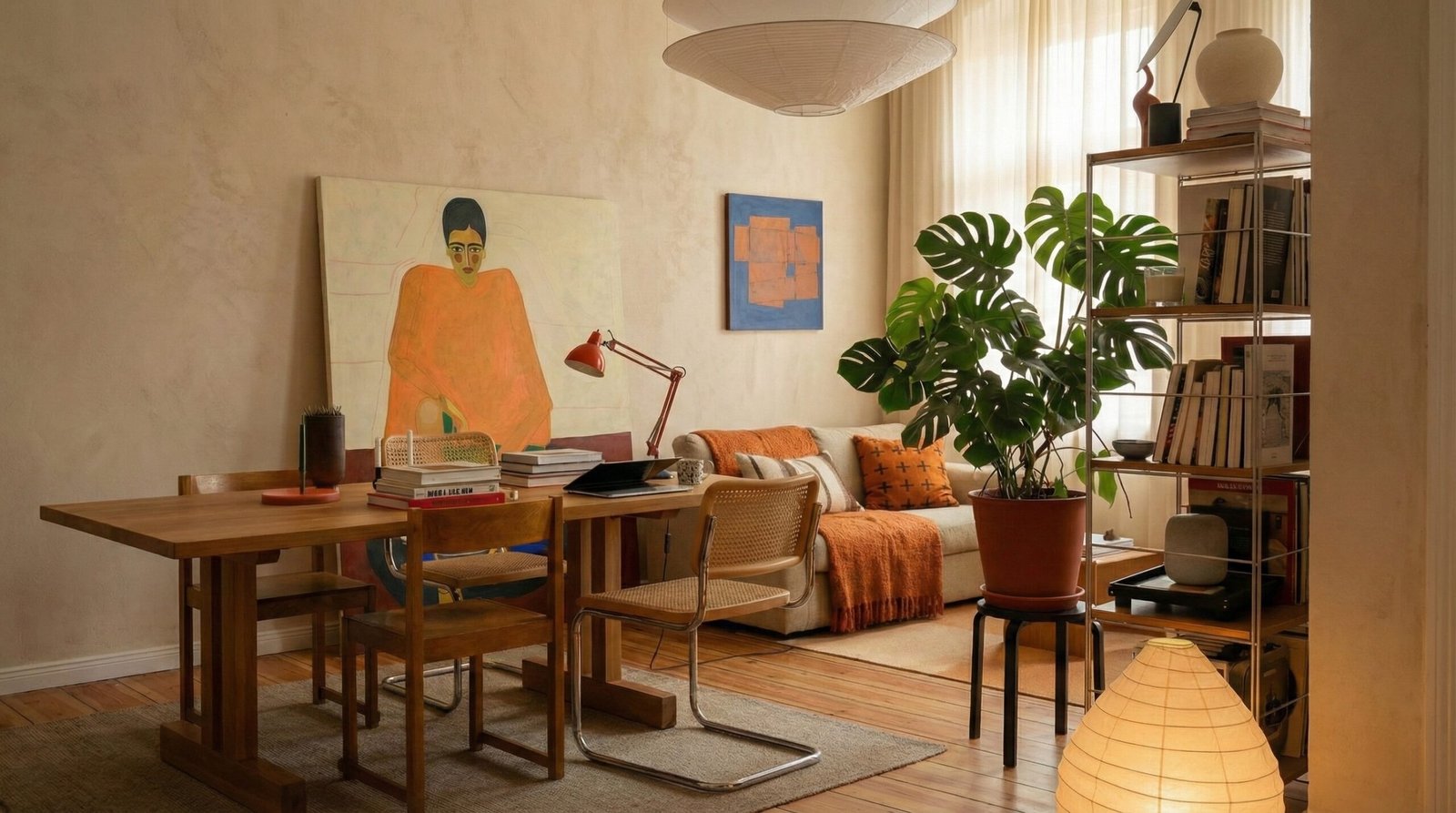



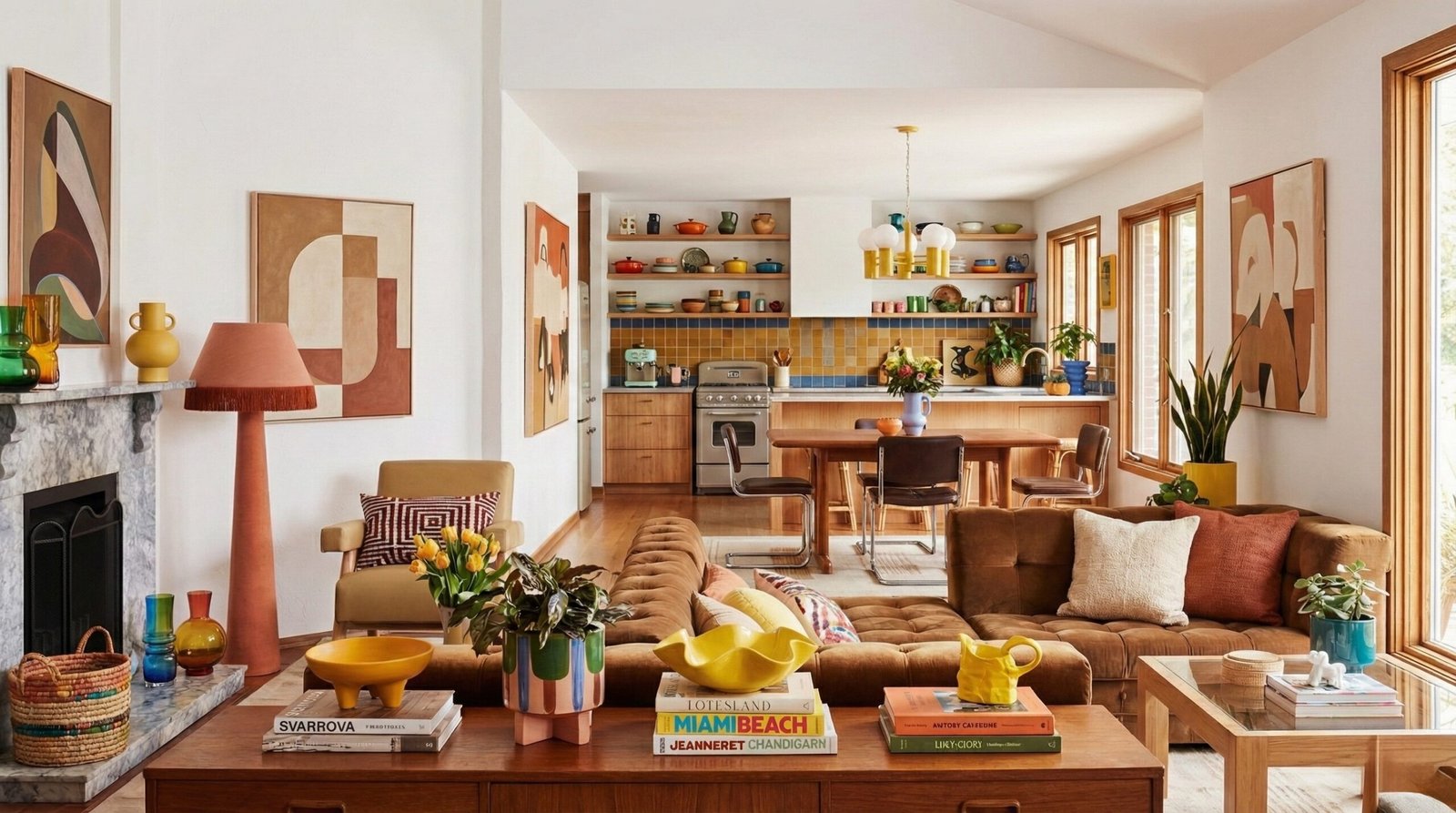
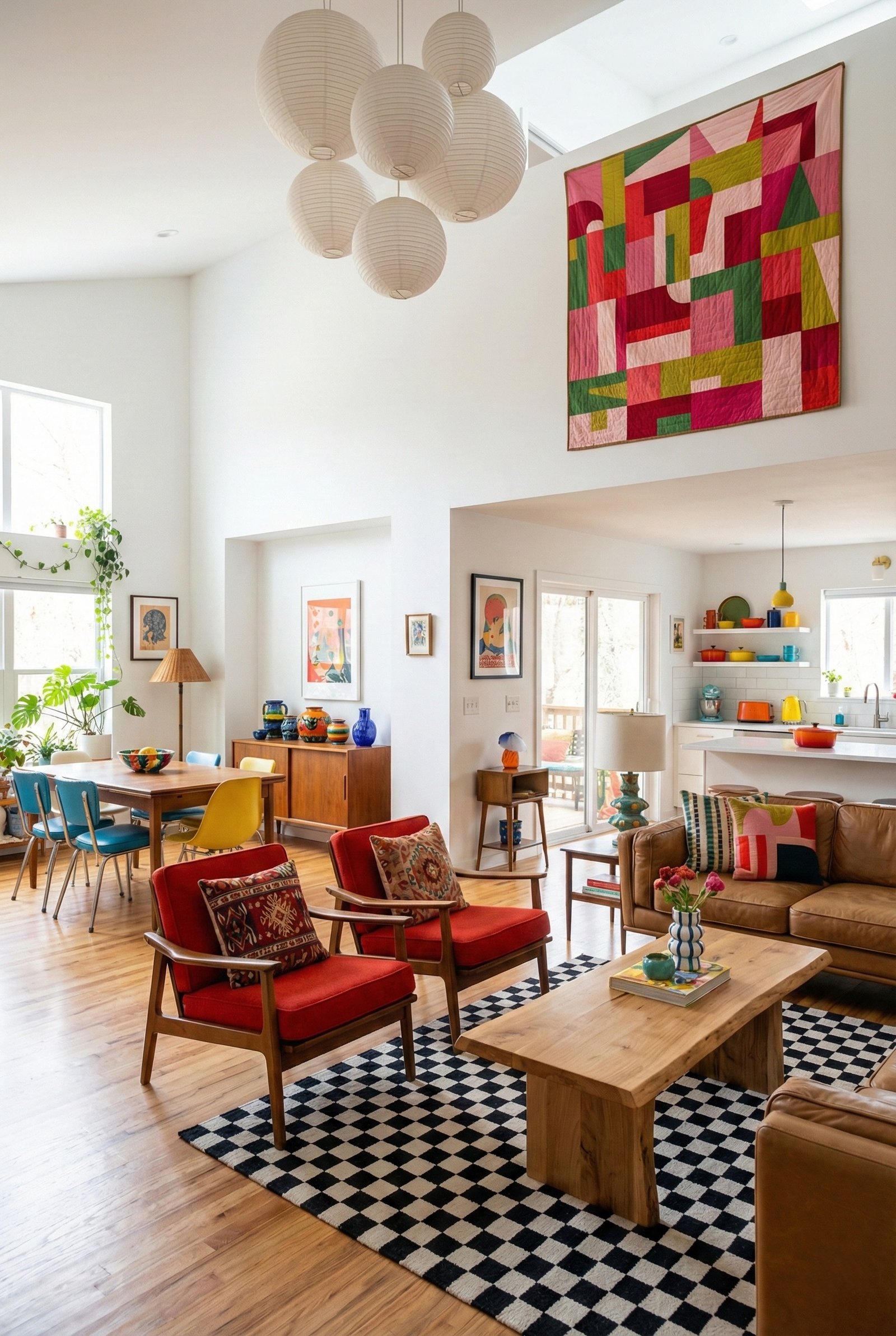
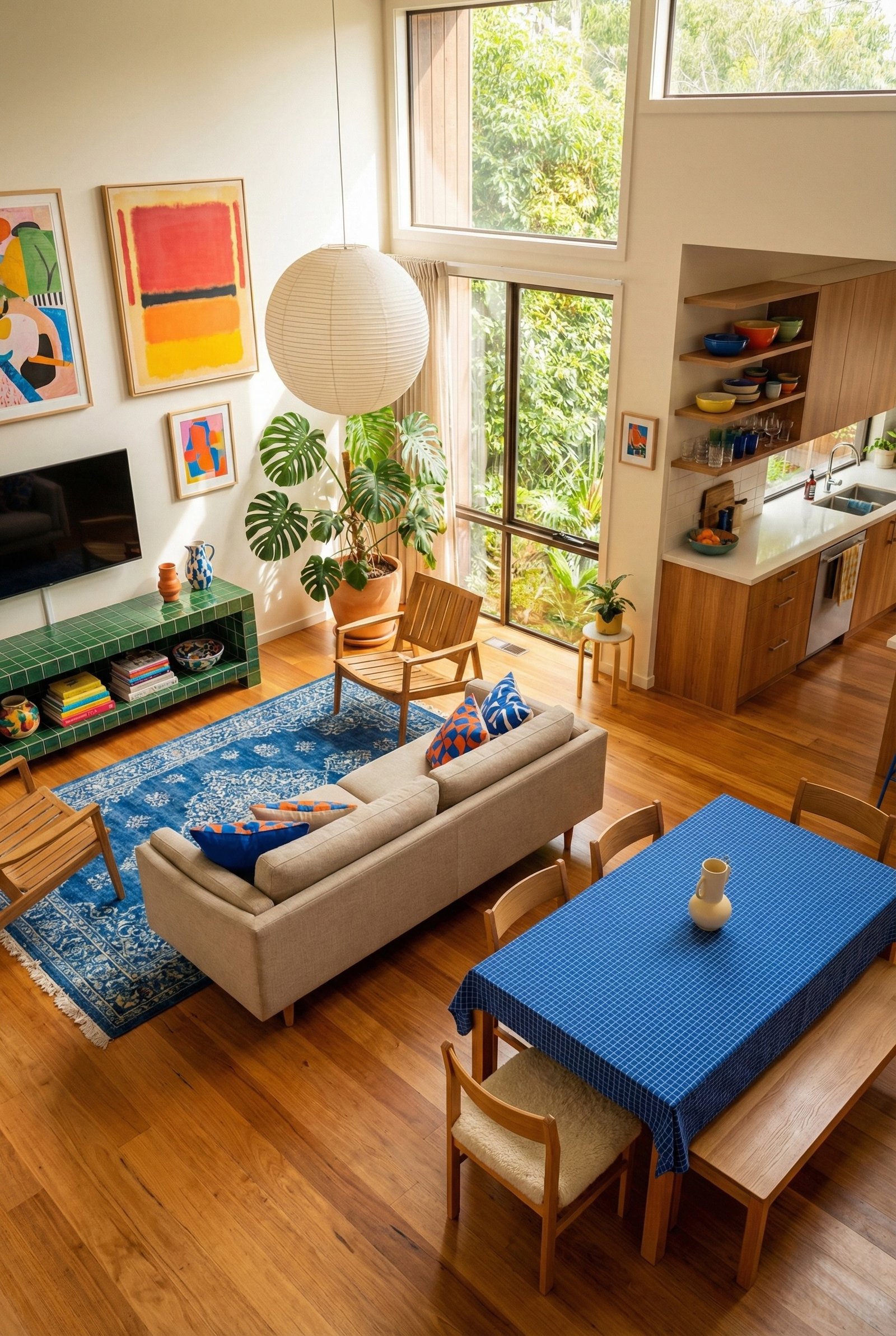
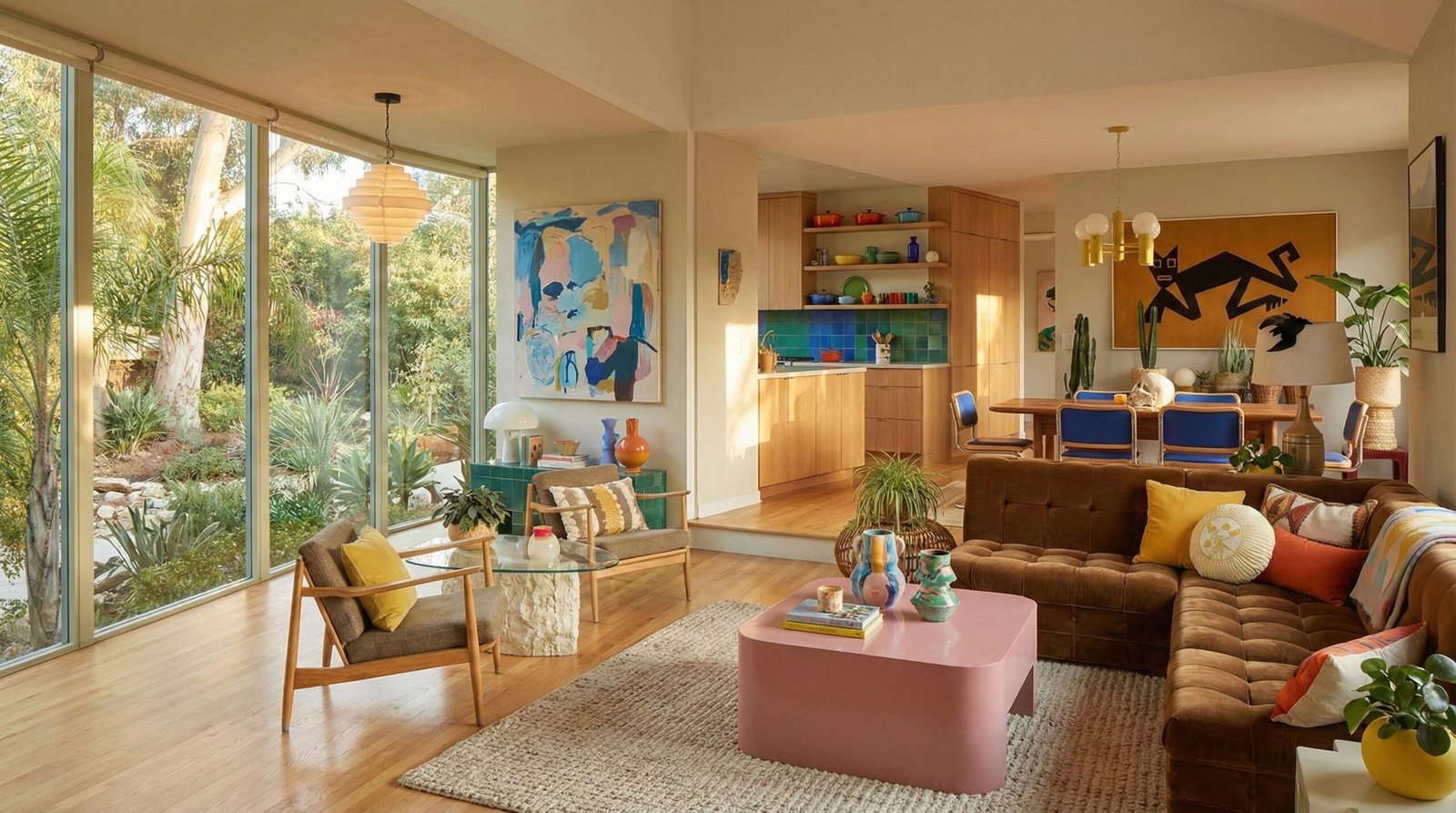
This is why accent pieces work so well for colour experimentation. You can introduce strong hues through materials that naturally temper them. Stone, timber, linen, clay, and aged metals all add complexity. They make colour feel grown-up, even when it’s playful.
Decorative Objects and the Stories They Carry
Some of the most meaningful colour in a home comes from objects that weren’t chosen for a colour scheme at all. A bowl bought at a local market. A framed print from a gallery visit you still remember clearly. A stack of books that just happens to lean warm or cool.
I once noticed that every colourful object in my own living space had a story attached to it. A burnt orange vase from a weekend away. A pale blue dish inherited from a relative. None of them were chosen to match each other, yet together they felt cohesive. The shared thread wasn’t colour. It was intention.
Decorative pieces like ceramics, glassware, trays, candles, and small sculptures allow colour to enter your home in human-sized doses. They don’t demand commitment. They invite curiosity. And because they’re small, they can move. A vase that feels too loud on a shelf might feel perfect on a dining table. A colourful object that overwhelms one room might quietly elevate another.