



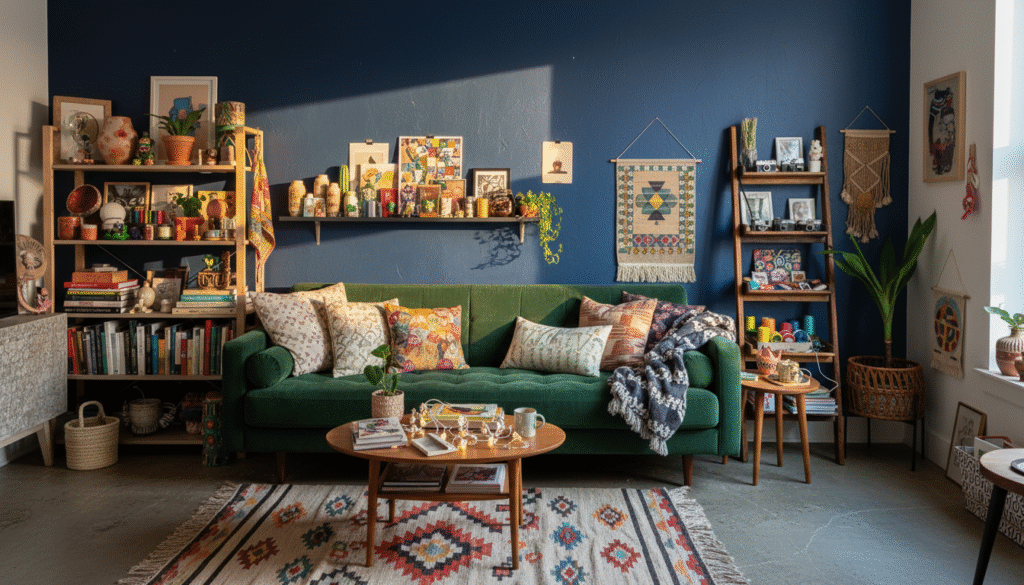
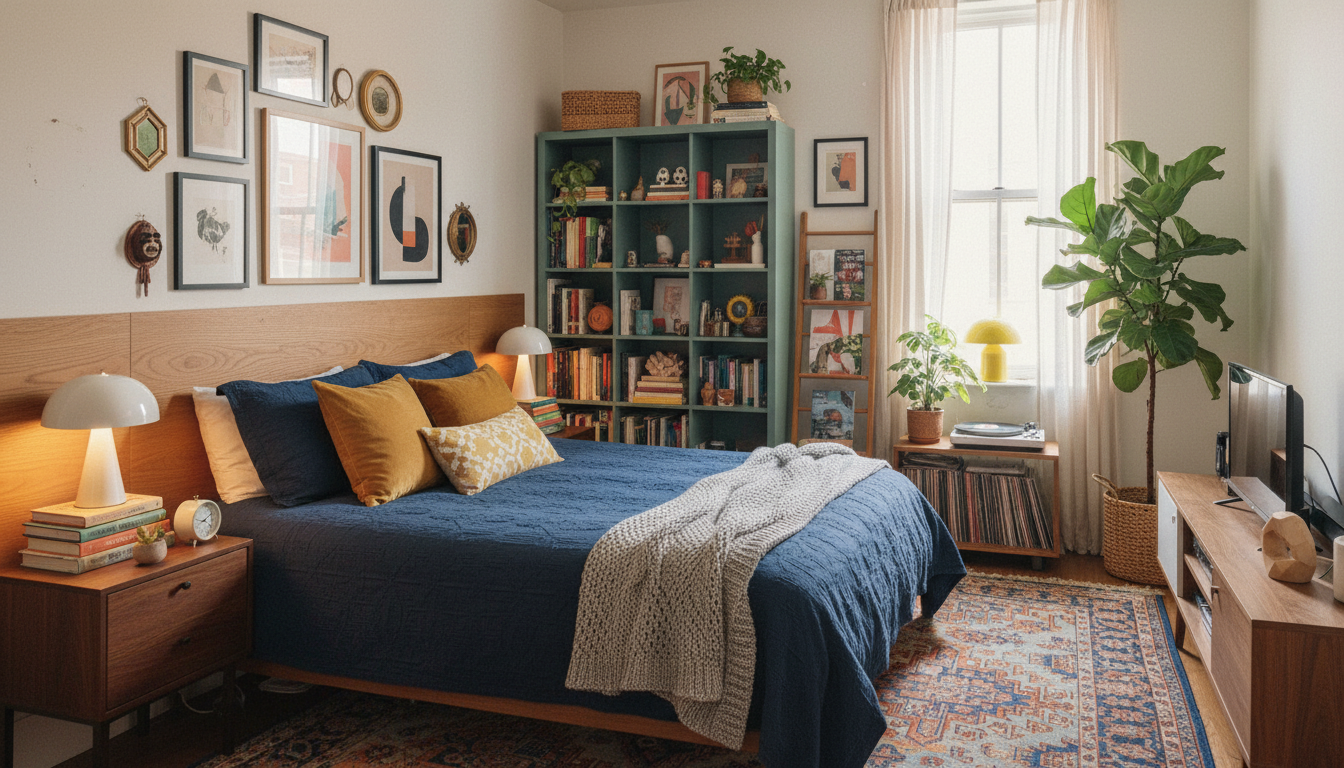
If you crave contrast or personality, smaller accents are the place to experiment. Cushions, throws, artwork, and decorative objects can introduce color and texture without overwhelming the room. This approach keeps the base of the space feeling open while still allowing it to reflect your taste. In small homes, restraint often creates more impact than abundance.
Clutter is the quiet enemy of compact living. It rarely arrives all at once. Instead, it builds slowly. A stack of books here, an extra candle there, a chair that becomes a permanent clothes holder. Over time, the space starts to feel heavy and chaotic, even if nothing has technically gone wrong. In small spaces, minimalism is less about aesthetics and more about mental clarity. That does not mean removing everything that makes a home feel personal. It means editing with intention.
Curating is the key. Choose decor that matters to you, items that tell a story, serve a purpose, or genuinely bring joy. A single ceramic vase with fresh greenery can feel more grounding than a shelf crowded with objects that mean nothing. Negative space is not empty space, it is breathing room. It allows the things you love to stand out rather than compete with one another.
Lighting is another element that can completely change how a small space feels. Relying on a single overhead light often makes a room feel flat and uninviting. Layered lighting creates depth and warmth. A floor lamp beside the sofa, a table lamp on a console, or wall sconces for reading can transform the atmosphere, especially in the evening. Soft pools of light make a space feel cozy and intentional rather than harsh or overly bright.
Natural light is always the most valuable asset in a small home. Keeping window treatments light and minimal allows daylight to fill the room. Sheer curtains, linen panels, or even bare windows can make a significant difference. Sunlight has a way of expanding space visually and emotionally, making even the smallest rooms feel more alive.
At its core, decorating a small space is an exercise in editing. It asks you to slow down, consider what you truly need, and decide what you want your home to say about you. Every piece has to justify its presence, which often leads to more meaningful choices. There is something freeing about that process. A small home does not demand perfection, it invites intention.
If you are struggling with your own small space right now, remember that it does not have to come together all at once. It is okay for it to be a work in progress. Homes evolve as we do. Add one thoughtful piece at a time. Rearrange when something no longer feels right. Let the space respond to your life rather than forcing it to match an ideal.
A small home can still feel expansive when it reflects who you are. In many ways, it can feel even richer than a larger one, because nothing is there by accident. The magic of small-space living is not about having less, it is about making room for what matters most.